






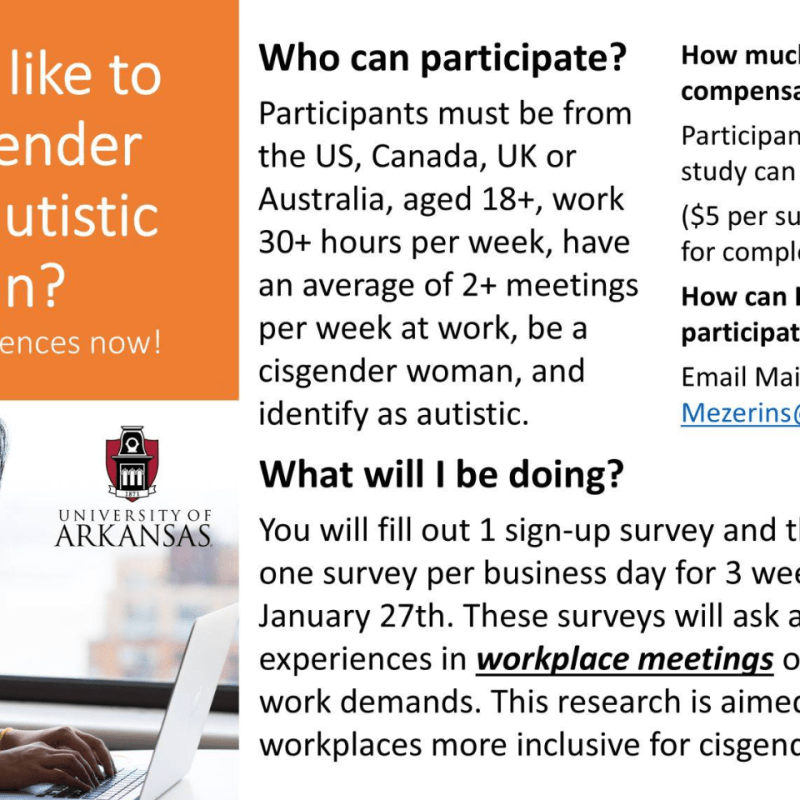
Call for Participants – Autistic Women and Workplace Meetings
Call for participants: My colleague is looking for research participants to study workplace experience of autistic women. Please support meaningful Autistic-led research by sharing this research recruitment with your network, and signing up for the study. Email them to get started. Read below: from: Maira Ezerins, MA, MBA PhD Candidate in Management, University of Arkansas…

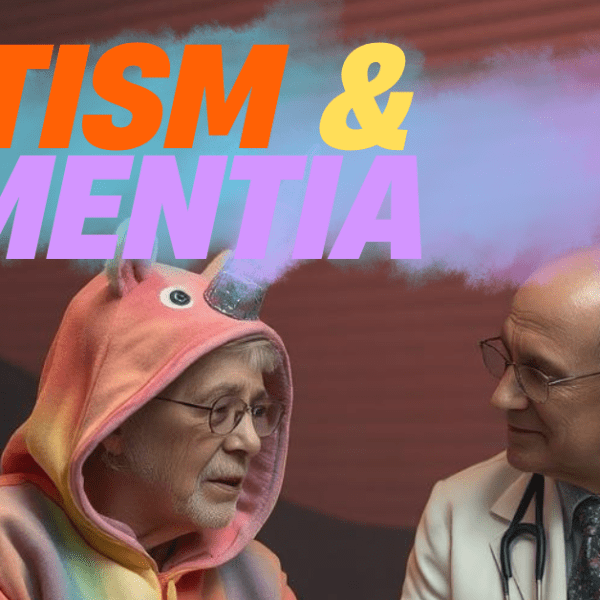
Study Finds Autistic Adults Face 4x Greater Risk of Dementia
In a study funded by the NIH, researchers from Drexel University in Pennsylvania, analyzed data from Medicaid and fee-for-service Medicare beneficiaries aged 30+ (2014–2016) found that autistic individuals had a 4x greater increase in dementia diagnoses compared to the general Medicare population. Findings were consistent with their previous research. Future research should address factors that…

If Autism is a cultural taboo, families will not seek out autism therapies
Researchers in Africa summarize how cultural taboos in many African societies attribute autism to spiritual causes, such as curses or witchcraft, leading families to seek help from traditional healers rather than evidence-based interventions. This belief system often stigmatizes autistic individuals and their families, creating resistance to systems of support. The Navajo tribe often views autistic…
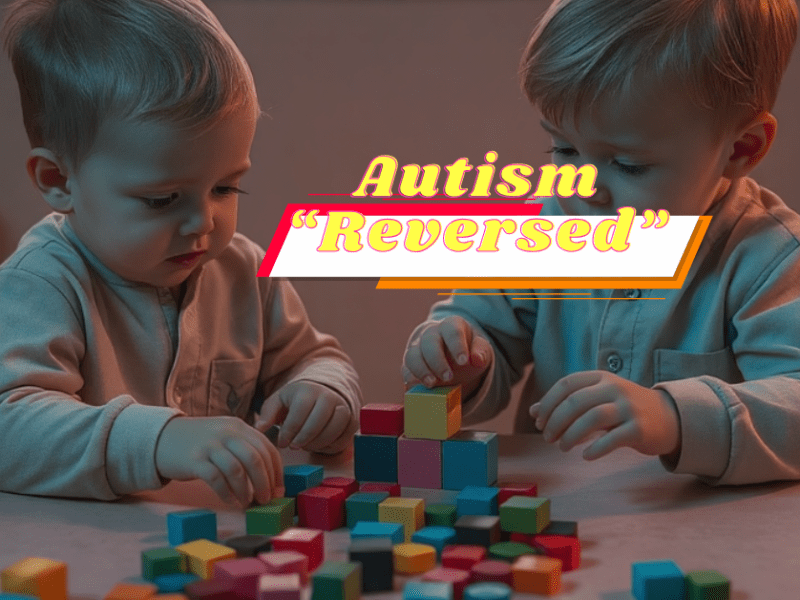
Concerns Regarding Publication on “Reversing” Autism
Subject: Concerns Regarding Publication on “Reversing” Autism Dear Dr. D’Adamo, cdadamo@som.umaryland.edu cc: Editorial office of the Journal of Personalized Medicine (J. Pers. Med.), jpm@mdpi.com I am writing to express my concerns regarding your recent article published in the Journal of Personalized Medicine (https://www.mdpi.com/2075-4426/14/6/641), which discusses the concept of “reversing” autism. As an Autistic professional, I…

Harmful Stereotypes in Autism Research at an Iraqi Treatment Center
In the Middle East, comparative research still clings to outdated terms like “normal.” Take this absurd study as an example: they set out to investigate “language problems such as pronoun reversal, echolalia, and articulation defects” in 9 autistic children (7 boys, 2 girls) aged 5–7 years. The study, conducted at the Hama’em Al Salam Centre…
Shocking Findings on Suicidal Struggles Among Autistic Youth and the Need for Better Support
California researchers investigated the connection between Autistic youth and su!c1dal1ty. They surveyed 103 autistic youth (10–17 years of age) who did not have a diagnosed intellectual disability. Findings indicate that 83.5% of Autistic youth surveyed reported lifetime thoughts. Resultantly, half of youth experiencing thoughts denied disclosure to their caregiver. Sadly, 24.3% had an attempt, but…
 msrepresent.com