
12th International Conference, ABAI, Lisbon, Portugal, November 11, 2025
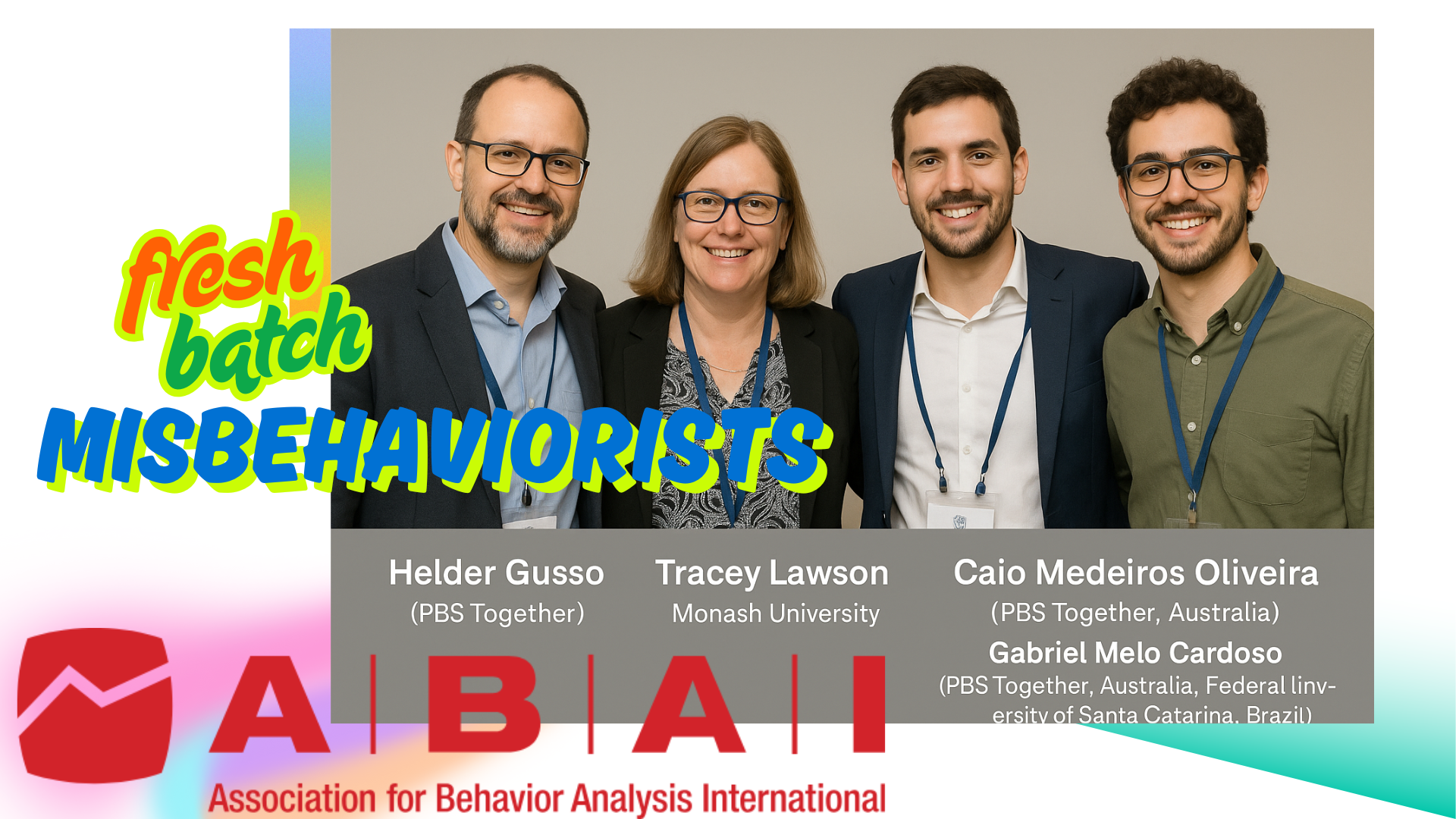
Workshop #W4 | Instructor: Helder Gusso, Ph.D. and colleagues
Overview of the Workshop
This workshop aims to teach participants how to design online courses using behavior analytic principles, educational technology, and artificial intelligence (AI). It critiques the traditional “content transmission” model, advocating instead for arrangements that engineer contingencies to shape learner behavior. The session promises real-world examples from Brazil and Australia, and involves group activities to apply these principles in course design. The intended audience is educators or instructional designers with foundational knowledge of behavior analysis.
Critique from a #banABA Perspective
1. Behaviorism and the Commodification of Learning
This workshop exemplifies the expansion of behaviorist ideology into new domains—here, online education—by framing all learning as behavior to be engineered and controlled. Rather than respecting the autonomy, agency, and diverse learning styles of adult students, it treats learners as subjects whose behaviors must be shaped through contingencies, reinforcement, and programmed instruction. This is a direct extension of the same logic that underpins ABA “therapy” for autistic people: the belief that external experts should define, measure, and modify what counts as “acceptable” behavior, regardless of the learner’s own goals or values.
2. Technological Amplification of Harmful Practices
By integrating AI and educational technology, this approach risks automating and scaling up the most dehumanizing aspects of behaviorism. AI-driven “contingencies” can monitor, prompt, and reinforce behaviors at a scale and intensity that would be impossible for a human instructor, increasing the risk of surveillance, manipulation, and loss of learner autonomy. This is especially concerning when the behaviorist framework is applied uncritically, as it often is in ABA, to populations who have already been harmed by compliance-based interventions—such as autistic students.
3. Pathologizing Divergence and Enforcing Compliance
The workshop description frames the goal of online course design as “the development of learners’ behaviors,” not the cultivation of knowledge, critical thinking, or self-determined learning. This reflects the same pathologizing mindset that underlies ABA: any deviation from the instructor’s goals is seen as a problem to be fixed, rather than a difference to be respected. For autistic adults, this approach is especially dangerous, as it perpetuates the logic that their natural ways of learning, communicating, and behaving are inherently “wrong” and must be replaced with normalized alternatives.
4. Ethical and Human Rights Concerns
The #banABA movement highlights that behaviorist interventions—especially when automated or data-driven—often disregard informed consent, learner dignity, and the right to refuse. The workshop’s emphasis on “high performance, retention, and satisfaction rates” as outcomes mirrors the ABA industry’s focus on measurable compliance, not meaningful learning or well-being. There is no mention of learner agency, self-advocacy, or the risks of coercion and trauma, which are well-documented in the context of ABA-based interventions for autistic people.
5. Exporting ABA’s Flawed Model to New Contexts
The workshop boasts of successful implementations in Brazil and Australia, but fails to address the global backlash against ABA’s methods or the ethical controversies surrounding its export. The #banABA movement, led by autistic advocates and scholars, has documented the harms of ABA—including trauma, PTSD, and lifelong masking—in both children and adults. Scaling up these practices through online platforms and AI does not solve these problems; it risks multiplying them.
Key Principles Violated:
- Respect for neurodiversity and learner autonomy
- Informed consent and the right to refuse
- Recognition of the documented harms of compliance-based interventions
- Inclusion of lived experience in course design and evaluation
**#banABA calls for the abolition—not the technological amplification—of these practices
This critique is grounded in the principles of the #banABA movement, which opposes the use of behaviorism to control, normalize, or pathologize autistic people and other marginalized learners.
- https://www.abainternational.org/events/program-details/event-detail.aspx?intConvId=120&by=CE&cetype=IBAO
- https://www.ulusofona.pt/en/event/artificial-intelligence-knowledge-and-the-university-ii
- https://www.abainternational.org/events/international-2025.aspx
- https://cei.umn.edu/programs/designing-and-delivering-online-learning
- https://www.abainternational.org/events/program-details/event-detail.aspx?intConvId=120&by=Workshop&date=11%2F11%2F2025
- https://www2.abainternational.org/events/program-details/event-detail.aspx?intConvId=120&by=CE&date=11%2F11%2F2025
- https://www2.abainternational.org/events/program-details/event-detail.aspx?sid=90491&by=Workshop
- https://www.abainternational.org/events/international/lisbon-2025/invited-presenters.aspx
- https://education.msu.edu/international/global-education-engagement/programs/
- https://allevents.in/lisboa/local-event-on-education/100001355318627499
Discover more from
Subscribe to get the latest posts sent to your email.
 msrepresent.com