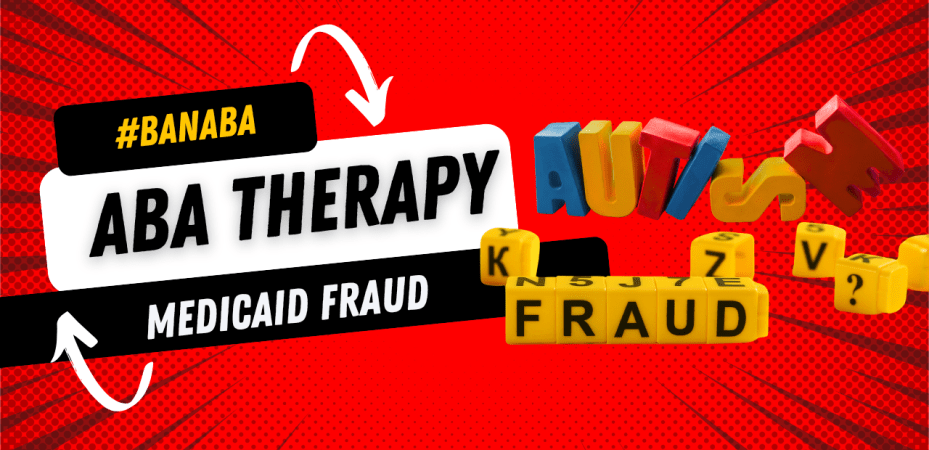
Federal law does not recognize ABA as medically-necessary for ‘autism’
The Untold Story: How ABA Became Medicaid-Reimbursable
Most people don’t realize that Applied Behavior Analysis (ABA)—now a multi-billion-dollar industry—was never directly mandated by federal law as a Medicaid-reimbursable “autism therapy.” Instead, a whirlwind of litigation, bureaucratic interpretation, and relentless industry lobbying positioned ABA as the only covered option, with consequences that are now being scrutinized by both lawmakers and law enforcement.
The Legal Foundation: EPSDT and Medicaid
The story begins with the federal Early and Periodic Screening, Diagnostic, and Treatment (EPSDT) provision, found in § 1905(r) of the Social Security Act (42 U.S.C. § 1396d(r)). EPSDT requires all state Medicaid agencies to provide medically necessary services to children—including a broad, catch-all category for any other necessary health care not specifically listed.
Despite this broad mandate, no federal statute ever explicitly named ABA therapy for reimbursement. Instead, Medicaid coverage grew out of legal challenges and subsequent policy guidance.
The Lawsuits That Set the Stage
Key lawsuits forced states to cover ABA:
- In Parents League for Effective Autism Services v. Jones-Kelly (6th Cir. 2008), the court held that ABA therapy could meet EPSDT standards for “medically necessary” care.
- K.G. ex rel. Garrido v. Dudek (11th Cir. 2012) confirmed that ABA might be required when deemed medically necessary for an autistic child.
These lawsuits didn’t say ABA was the only valid therapy—but industry lobbyists positioned these rulings as proof that states had to pay for ABA.
CMS Steps In: From Guidance to Industry
In July 2014, the Centers for Medicare and Medicaid Services (CMS) issued an Informational Bulletin directing Medicaid agencies to cover “autism spectrum disorder-related services” under EPSDT when medically necessary, naming ABA as an example. This wasn’t law—it was subregulatory guidance and, by its own terms, acknowledged that “ABA” was only one possible option.
CMS followed up in September 2014 with FAQs, reinforcing the precedent. But the effect was clear: states rushed to amend their Medicaid plans (State Plan Amendments or SPAs), often at the urging of ABA industry groups, to include ABA as a covered benefit.
How It Played Out in the States: The Nebraska Example
In December 2015, Nebraska amended its Medicaid State Plan to include ABA, and CMS approved it in March 2016. ABA was now listed as one of several “autism service models.” Providers had to document diagnoses and medical necessity, but compliance oversight was minimal.
Within just a few years, Nebraska saw ABA Medicaid billing explode—a staggering rise of over 2,000%. This was not evidence of unmet clinical need being addressed, but of industry capturing a new, guaranteed revenue stream.
As costs soared and reports emerged of questionable billing practices, Nebraska DHHS responded with steep cuts to ABA reimbursement in 2025, citing “fiscal sustainability.” The message was unambiguous: ABA was funded because of CMS interpretation and lawsuits, not because it was proven as essential healthcare for every autistic child.
Medicaid Fraud, the FBI, and the “Healthcare” Question
The flood of Medicaid money into ABA clinics has brought increased federal scrutiny:
- The HHS Office of Inspector General (OIG) and the FBI have launched investigations into widespread overbilling, fraudulent documentation, and misuse of Medicaid funds by ABA providers—resulting in multimillion-dollar recoveries in several states.
- These investigations show a significant gap between what is “medically necessary” healthcare and what is being delivered under the banner of autism “treatment.”
States like Nebraska are now facing the hard truth: EPSDT and Medicaid are meant to fund services that genuinely support health and life participation—not blanket reimbursement for any intervention marketed as “autism therapy.” The legal framework empowers states to define what is medically necessary and exclude treatments that do not further health or equity, or that foster fraud and waste.
Lessons for Policymakers and Advocates
- Medicaid does not require ABA—CMS and courts left room for multiple, individualized supports.
- Industry-driven policies can be reversed when they produce fraud and unsustainable costs.
- States have leeway under EPSDT to define and fund interventions that uphold rights, foster independence, and comply with civil rights law—not just behavioral compliance.
- Legal action is now focused not on adding ABA, but on removing abusive or wasteful practices.
States like Nebraska demonstrate that stakeholders, advocates, and lawmakers can and should reconsider what truly constitutes healthcare for autistic people—especially when billions are at stake, and the wellbeing of an entire community hangs in the balance.
#autism #medicaid #policy #banABA #fraud #disabilityrights #MedicaidReform
Discover more from
Subscribe to get the latest posts sent to your email.
 msrepresent.com